Impact of PFAS Contamination
at the Burlington Air National Guard Base
The Winooski River is severely contaminated - and fish are likely poisoned.
(part 2 of a 3-part series)
By Pat Elder
January 28. 2021
at the Burlington Air National Guard Base
The Winooski River is severely contaminated - and fish are likely poisoned.
(part 2 of a 3-part series)
By Pat Elder
January 28. 2021
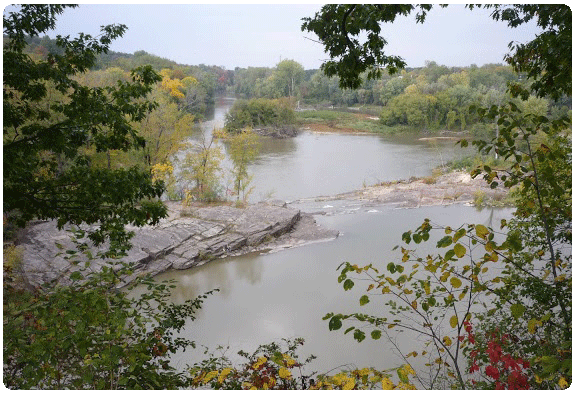
The Salmon Hole on the Winooski River is located two miles downstream
from the burn pit at the Burlington Air National Guard Base.
This is the second article in a three-part series on the contamination caused by the use of per-and-poly fluoroalkyl substances (PFAS) at the Burlington, Vermont Air National Guard base. This work is made possible through the generous support from the Women’s International League for Peace and Freedom (WILFP-US Section), the WILPF Burlington Branch, and the Center for Health, Environment, and Justice - a project of the Peoples Action Institute.
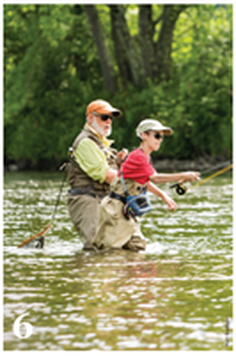
The “Salmon Hole” of the Winooski River near downtown Winooski is a famed Vermont fishing spot known for producing a wide range of fish species just minutes from the center of Burlington.
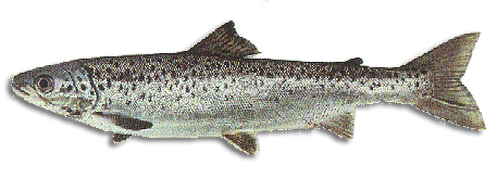 The Landlocked Atlantic Salmon may be unhealthy to eat.
The river provides a habitat for many species and provides excellent shoreline fishing opportunities. Landlocked Atlantic salmon, steelhead rainbow trout, walleye, smallmouth bass, rock bass, white perch, yellow perch, brown bullhead, bowfin, freshwater drum, fall fish, lake trout, brown trout, redhorse sucker and white sucker are frequently caught.
Are the fish OK to eat? How much PFAS is in each species of fish, and how badly contaminated is the river? Although the US EPA and the state of Vermont are slow to respond, we know most of the PFAS in our bodies comes from eating seafood. In fact, the European Food Safety Authority (EFSA) estimates that fish and other seafood account for up to 86% of dietary PFAS exposure in adults.
The fish - and the food grown in fields fertilized with PFAS-laced sewer sludge are making us sick much more so than the drinking water.
Here, I’ll look at the efforts by the state to establish surface water standards for PFAS and I’ll examine the likelihood of widespread PFAS contamination of fish in the Winooski River. In Part 3 I’ll examine how the contaminated wastewater and sewer sludge are poisoning our food.
Are the fish OK to eat? How much PFAS is in each species of fish, and how badly contaminated is the river? Although the US EPA and the state of Vermont are slow to respond, we know most of the PFAS in our bodies comes from eating seafood. In fact, the European Food Safety Authority (EFSA) estimates that fish and other seafood account for up to 86% of dietary PFAS exposure in adults.
The fish - and the food grown in fields fertilized with PFAS-laced sewer sludge are making us sick much more so than the drinking water.
Here, I’ll look at the efforts by the state to establish surface water standards for PFAS and I’ll examine the likelihood of widespread PFAS contamination of fish in the Winooski River. In Part 3 I’ll examine how the contaminated wastewater and sewer sludge are poisoning our food.
First, what we know: The Vermont Air National Guard Base released test results in June, 2019 showing a total of 704.3 parts per trillion of 14 varieties of PFAS in the river adjacent to the base.
=========================================
Table 6 - Summary of Surface Water Analytical Results
Expanded Site Inspection Report for PFAS Burlington ANGB,
South Burlington, Vermont (Winooski River SW-002)
PFAS Type PPT PFAS Type PPT
PFHpA 9.2 PFBA 10
PFHxS 140 PFHpS 7.1
PFNA 2.2 PFHxA 31
PFOA 28 PFOSA 1
PFOS 370 PFPeA 16
6:2 FTS 49 PFPeS 20
8:2 FTS 4.8 PFBS 16
Totals 704.3 PPT
=========================================
The state has not tested for PFAS in the Winooski River.
=========================================
Table 6 - Summary of Surface Water Analytical Results
Expanded Site Inspection Report for PFAS Burlington ANGB,
South Burlington, Vermont (Winooski River SW-002)
PFAS Type PPT PFAS Type PPT
PFHpA 9.2 PFBA 10
PFHxS 140 PFHpS 7.1
PFNA 2.2 PFHxA 31
PFOA 28 PFOSA 1
PFOS 370 PFPeA 16
6:2 FTS 49 PFPeS 20
8:2 FTS 4.8 PFBS 16
Totals 704.3 PPT
=========================================
The state has not tested for PFAS in the Winooski River.
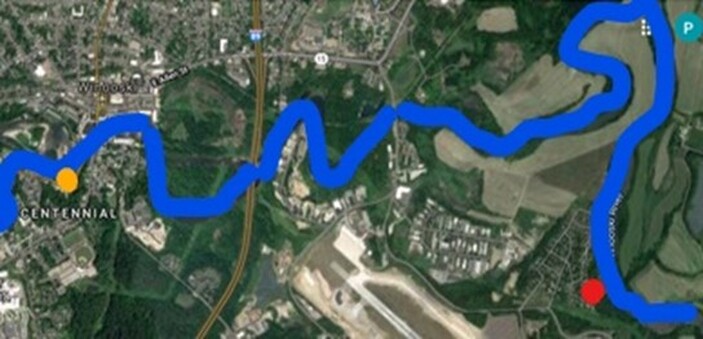
The Winooski River generally flows from the east. The red dot marks the spot where
VTANG tested the water for PFAS. The orange dot is the Salmon Hole.
The Vermont Agency of Natural Resources (ANR) has promised to adopt surface water quality standards that are protective of human health through the consumption of fish and shellfish. The regulations are expected before January 1, 2024. Vermont is developing standards in surface water for just five types of PFAS: PFOA, PFOS, PFHxS, PFNA, and PFHpA. The basket of five may sound familiar because the state already limits them to 20 parts per trillion in groundwater and drinking water.
On the one hand, it’s easy to go after the state for dropping the ball on this. There are thousands of varieties of PFAS that may be found in Vermont’s environment and they’re all deemed to be harmful. Meanwhile, public health officials call for regulating the entire class of chemicals. Why is Vermont content with only regulating 5 types of PFAS? At a minimum, the state ought to begin regulating the 14 varieties of PFAS already identified in the Winooski. Many commercial labs have the ability to test for 36 PFAS compounds. Vermont ought to test for everything possible. It’s all bad.
On the other hand, this will be the first time the ANR has attempted to establish water quality standards for a group of chemical contaminants that are unregulated by the EPA. Many states are going through this. It’s good to see that the ANR and the New Hampshire Department of Environmental Services (NHDES) have been working together to develop a plan to adopt ambient water quality criteria for aquatic life.
Of course, the EPA ought to be developing and enforcing these standards. Geez, they’re totally out to lunch. Hopefully, this will change under the Biden administration.
The Vermont Agency of Natural Resources says it’s committed to monitoring for PFAS in aquatic life and establishing human health criteria using fish tissue. They just need to hurry up.

The ANR also says it will establish programs to control the PFAS sources entering wastewater treatment plants. That’ll be tough when it comes to the Burlington ANG base. The contamination is akin to a giant saturated, subterranean sponge that indefinitely squeezes out toxins. How is Vermont planning to control this source of PFAS contamination when the polluter is the United States of America? The US claims “sovereign immunity” in court cases brought by states seeking to be compensated for damages. In essence, the feds are saying, “You deal with it.”
The ANR promises to develop safe limits of PFAS in fish. Hopefully, the levels allowed in fish will be no greater than the limits allowed in drinking water. If this is the case, consuming fish from the Winooski below the Air National Guard base is likely to become a thing of the past. Below, I’ll examine the exponential growth of PFAS in fish through a process known as bioaccumulation.
We must protect public health from the scourge of these chemicals at the tiniest levels. Commercial fishermen and others must be compensated for lost wages. The state should not underestimate the financial costs of various measures designed to protect public health. We must bear in mind that the number one way this stuff finds its way into our bodies is through the food we eat - especially the seafood.
The ANR promises to develop safe limits of PFAS in fish. Hopefully, the levels allowed in fish will be no greater than the limits allowed in drinking water. If this is the case, consuming fish from the Winooski below the Air National Guard base is likely to become a thing of the past. Below, I’ll examine the exponential growth of PFAS in fish through a process known as bioaccumulation.
We must protect public health from the scourge of these chemicals at the tiniest levels. Commercial fishermen and others must be compensated for lost wages. The state should not underestimate the financial costs of various measures designed to protect public health. We must bear in mind that the number one way this stuff finds its way into our bodies is through the food we eat - especially the seafood.
 Fried fish from the Winooski?
Vermonters are fortunate, sort of. The state has a track record that is one of the best in the nation as far as protecting health from environmental contaminants, although that’s not saying much these days. Vermont is moving too slowly on PFAS while public health is threatened.
Michigan and Minnesota have established surface water quality standards for PFOS and PFOA. Michigan limits PFOS to 11 ppt and PFOA to 420 ppt. Minnesota’s standards are set at 11 ppt for PFOS and 610 for PFOA. PFOS is more mobile and more bio accumulative in water than PFOA. The Winooski was shown to have 370 ppt of PFOS, along with 334.3 parts per trillion of 13 other kinds of PFAS.
Vermont doesn’t have to totally re-discover the ambient water quality wheel.
Michigan and Minnesota have established surface water quality standards for PFOS and PFOA. Michigan limits PFOS to 11 ppt and PFOA to 420 ppt. Minnesota’s standards are set at 11 ppt for PFOS and 610 for PFOA. PFOS is more mobile and more bio accumulative in water than PFOA. The Winooski was shown to have 370 ppt of PFOS, along with 334.3 parts per trillion of 13 other kinds of PFAS.
Vermont doesn’t have to totally re-discover the ambient water quality wheel.

PFAS Fish, a short video by Hoosick Falls native Victor Pytko
In 2018 the DEC released a status report on PFAS contamination in Bennington, 125 miles south of Burlington, that downplayed the threat to public health from contaminated fish. Fish were collected from the Walloomsac River and other locations. The results from the Walloomsac showed a maximum concentration of PFOA+PFOS at 7,180 ppt. These levels were determined not to pose a risk to the public consuming the fish. The contamination in Bennington was caused by the now closed Chemfab plant. It is likely that the Walloomsac fish may contain many more PFAS contaminants than the totals of PFOS and PFOA the state has reported.
The DEC wrote, “The results from these limited data do not prompt the Health Department to issue any specific advice regarding fish consumption in the Bennington area. The results did not prompt the technical review team to recommend any additional fish testing at this time.”
It just doesn’t make sense. Vermont ought to be testing fish for PFAS all over the state. Consider the mathematics of PFAS contamination.
The DEC wrote, “The results from these limited data do not prompt the Health Department to issue any specific advice regarding fish consumption in the Bennington area. The results did not prompt the technical review team to recommend any additional fish testing at this time.”
It just doesn’t make sense. Vermont ought to be testing fish for PFAS all over the state. Consider the mathematics of PFAS contamination.
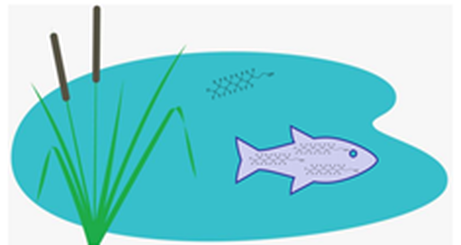 Graphic: The Wisconsin Department of Natural Resources
A meal of pan-fried fish may weigh 8 ounces or 227 grams. If the filet of the fish contains 7,180 ppt of two kinds of PFAS chemicals, (and likely twice that amount if all PFAS chemicals had been analyzed,) that’s 7.18 parts per billion, which is the same as 7.18 nanograms per gram. So, 7.18 ng/g x 227 g = 1,630 ng of PFAS chemicals. An 8-ounce serving of fish from a river in Vermont contains 1,630 nanograms of PFAS. Hold the thought.
With the EPA on the sidelines, we look to the European Food Safety Authority (EFSA) for guidance. EFSA has set a Tolerable Weekly Intake (TWI) of 4.4 nanograms per kilogram of body weight for PFOS, PFOA and two other PFAS chemicals they track in food. So, according to this guideline, a 7-year-old weighing 50 pounds (22.6 kilos) can “safely” consume 100 nanograms per week of PFAS chemicals.
One meal of Vermont fried fish containing 1,630 ng of PFAS is more than 16 times greater than the European weekly limit for our child. If we abide by the more responsible 1 ppt daily limit of PFAS championed by public health experts, our little boy would be limited to ingesting one serving every four and a half years.
It is ironic that Vermont limits the basket of 5 PFAS to 20 ppt in drinking water, while it’s OK for a 7-year-old to consume 80 times that in a single meal.
With the EPA on the sidelines, we look to the European Food Safety Authority (EFSA) for guidance. EFSA has set a Tolerable Weekly Intake (TWI) of 4.4 nanograms per kilogram of body weight for PFOS, PFOA and two other PFAS chemicals they track in food. So, according to this guideline, a 7-year-old weighing 50 pounds (22.6 kilos) can “safely” consume 100 nanograms per week of PFAS chemicals.
One meal of Vermont fried fish containing 1,630 ng of PFAS is more than 16 times greater than the European weekly limit for our child. If we abide by the more responsible 1 ppt daily limit of PFAS championed by public health experts, our little boy would be limited to ingesting one serving every four and a half years.
It is ironic that Vermont limits the basket of 5 PFAS to 20 ppt in drinking water, while it’s OK for a 7-year-old to consume 80 times that in a single meal.
 Credit: Vermont Agency for Natural Resources
Surface water samples from Paran Creek near the Walloomsac River were shown to contain 37.6 ppt of PFOA/PFOA. To compare, the Winooski had 398 ppt of the two compounds near the Vermont Air National Guard base.
PFAS bioaccumulates in fish tissue when surface water levels are barely detectable. The Wisconsin Department of Natural Resources says that surface water levels throughout the Badger state that exceed 2 ppt of PFAS pose a threat to human health. Actually, any levels of PFAS are dangerous in the rivers. A seabass caught in Maryland in the lower Potomac River was found to contain 23,100 ppt of PFAS. It was caught near a small navy base from waters containing 13.45 ppt of the substances. Crabs contained 6,650 ppt and oysters had 2,070 ppt. The seafood is unsafe to eat, although Maryland, like Vermont, still looks the other way.
Bioaccumulation is the increase in the concentration of a contaminant in aquatic life over time. PFAS chemicals tend to hang around forever, so even when military bases and industrial sites eventually stop using PFAS, the chemicals remain in the ground, water, sediment, and/or wildlife. It’s a big problem.
Fish consume PFAS from the diet and through the gills. The older the fish, generally, the more PFAS it contains - and the same likely holds true for oysters, clams, crabs, and lobsters. More study is needed, followed by regulations designed to protect public health.
Bioaccumulation factors are calculated as the ratio of the concentration of PFAS in fish tissue to its concentration in the ambient water. PFOS is believed to be the most bioaccumulative of all PFAS chemicals.
Bioaccumulation factors account for fish near some military bases containing nearly 10,000,000 parts per trillion of the toxins. Fish caught near Wurtsmith AFB in Michigan contained 9,580,000 ppt. of PFOS alone, while Barksdale AFB in Louisiana reports 9,349,000 ppt of PFOS in fish there. (Lanza et al., 2017.) We don’t know their water levels, although these bases had burn pits similar to Burlington’s.
Data collected from fish caught near military and industrial sites from many of the nation’s great rivers show contamination levels exceeding hundreds of thousands of parts per trillion. This is a public health crisis that most states are ignoring. Think of our little boy, or more importantly, think of women who are pregnant or may become pregnant. They are particularly vulnerable.
The Wisconsin Department of Natural Resources found that a fish caught in a creek near the Truax Air National Guard Base contained 92,300 parts per trillion of PFAS, while the water contained 53.3 parts per trillion, (ppt).
In Maine, a brook trout had concentrations of 1,080,000 ppt of PFOS alone, in a stream near Loring Air Force Base, where fire-fighting foams, like those in Burlington, were carelessly used for years. Surface water there reached a high of 445.6 ppt for PFOS + PFOA, close to the Winooski’s level of 549.4. (See FINAL SITE INSPECTION REPORT FOR AQUEOUS FILM FORMING FOAM (AFFF) AREAS AT FORMER LORING AIR FORCE BASE, MAINE 2018.)
PFAS concentrations in Surface Water and Fish
====================================================
State Location Fish Water Fish/Water
Wisconsin Truax AFB 92,300 53.3 1,731
Maryland Pax River, Navy 23,100 13.5 1,711
Maine Loring AFB 1,080,000 445.6 2,423
Vermont Walloomsac 7,180 37.6 191
Vermont Burlington ANG ------- 704.3 -------
=============================================================
This is a wakeup call for the Green Mountain State. Your rivers are flowing with poisons. What are you going to do about it and how long will it take?
PFAS bioaccumulates in fish tissue when surface water levels are barely detectable. The Wisconsin Department of Natural Resources says that surface water levels throughout the Badger state that exceed 2 ppt of PFAS pose a threat to human health. Actually, any levels of PFAS are dangerous in the rivers. A seabass caught in Maryland in the lower Potomac River was found to contain 23,100 ppt of PFAS. It was caught near a small navy base from waters containing 13.45 ppt of the substances. Crabs contained 6,650 ppt and oysters had 2,070 ppt. The seafood is unsafe to eat, although Maryland, like Vermont, still looks the other way.
Bioaccumulation is the increase in the concentration of a contaminant in aquatic life over time. PFAS chemicals tend to hang around forever, so even when military bases and industrial sites eventually stop using PFAS, the chemicals remain in the ground, water, sediment, and/or wildlife. It’s a big problem.
Fish consume PFAS from the diet and through the gills. The older the fish, generally, the more PFAS it contains - and the same likely holds true for oysters, clams, crabs, and lobsters. More study is needed, followed by regulations designed to protect public health.
Bioaccumulation factors are calculated as the ratio of the concentration of PFAS in fish tissue to its concentration in the ambient water. PFOS is believed to be the most bioaccumulative of all PFAS chemicals.
Bioaccumulation factors account for fish near some military bases containing nearly 10,000,000 parts per trillion of the toxins. Fish caught near Wurtsmith AFB in Michigan contained 9,580,000 ppt. of PFOS alone, while Barksdale AFB in Louisiana reports 9,349,000 ppt of PFOS in fish there. (Lanza et al., 2017.) We don’t know their water levels, although these bases had burn pits similar to Burlington’s.
Data collected from fish caught near military and industrial sites from many of the nation’s great rivers show contamination levels exceeding hundreds of thousands of parts per trillion. This is a public health crisis that most states are ignoring. Think of our little boy, or more importantly, think of women who are pregnant or may become pregnant. They are particularly vulnerable.
The Wisconsin Department of Natural Resources found that a fish caught in a creek near the Truax Air National Guard Base contained 92,300 parts per trillion of PFAS, while the water contained 53.3 parts per trillion, (ppt).
In Maine, a brook trout had concentrations of 1,080,000 ppt of PFOS alone, in a stream near Loring Air Force Base, where fire-fighting foams, like those in Burlington, were carelessly used for years. Surface water there reached a high of 445.6 ppt for PFOS + PFOA, close to the Winooski’s level of 549.4. (See FINAL SITE INSPECTION REPORT FOR AQUEOUS FILM FORMING FOAM (AFFF) AREAS AT FORMER LORING AIR FORCE BASE, MAINE 2018.)
PFAS concentrations in Surface Water and Fish
====================================================
State Location Fish Water Fish/Water
Wisconsin Truax AFB 92,300 53.3 1,731
Maryland Pax River, Navy 23,100 13.5 1,711
Maine Loring AFB 1,080,000 445.6 2,423
Vermont Walloomsac 7,180 37.6 191
Vermont Burlington ANG ------- 704.3 -------
=============================================================
This is a wakeup call for the Green Mountain State. Your rivers are flowing with poisons. What are you going to do about it and how long will it take?
